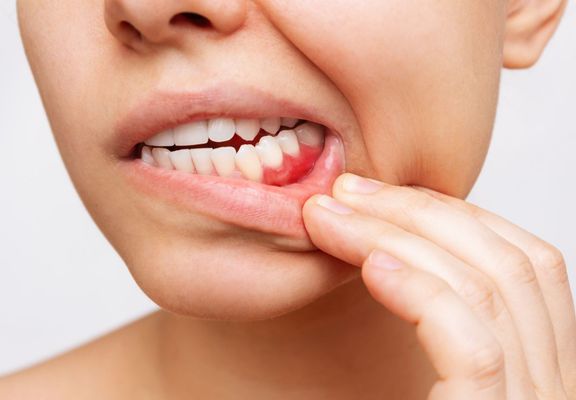
Periodontitis is a common condition in which the gums and jawbone are attacked by harmful bacteria. Over time, this can lead to the formation of abscesses and eventual tooth loss. It is one of the most widespread chronic diseases worldwide. In Germany, roughly one in two people over the age of 50 is affected. The main causes include genetic predisposition, lifestyle factors, and/or ineffective oral hygiene. Because gum disease often develops slowly and painlessly, regular dental check-ups are essential for early detection. You can find potential signs of periodontitis below – and of course, you’re welcome to schedule a preventive appointment at our clinic.
What are the signs of periodontitis?
Many patients do not initially notice they have gum disease, as it can progress silently over many years. Early diagnosis and treatment are vital to protect not only the teeth and supporting structures but also overall health. Harmful bacteria enter through the gums into the jawbone, breaking down bone tissue and eventually causing tooth loss. From there, bacteria can enter the bloodstream and spread throughout the body, potentially affecting vital organs such as the heart and lungs.
If you notice any possible symptoms of periodontitis, it’s important to act quickly and see your dentist without delay. Early warning signs include reddened gums, occasional bleeding when brushing, and persistent bad breath. In its early stages, treatment is usually straightforward and highly effective.
Can I do anything myself?
Unfortunately, periodontitis cannot be cured. This means that once the disease has occurred, patients will always be at greater risk of renewed gum inflammation. However, with regular and diligent care of both teeth and gums, the prognosis can be significantly improved. Ultimately, the success of treatment largely depends on you.
A lasting change in lifestyle (especially for smokers) and good oral hygiene at home are essential. It may also be beneficial to eliminate areas where teeth are crowded or misaligned, as harmful bacteria can accumulate in such niches and remain protected from brushing. As part of our aftercare programme, we support you in maintaining long-term treatment success.
What are the long-term consequences of untreated periodontitis?
Gaps between teeth in the adult dentition can cause problems, as the overall stability of the dental arch deteriorates. Isolated teeth lose contact with their neighbours and can no longer support each other during chewing.
Neighbouring teeth may drift into the empty space, narrowing the gap while simultaneously losing contact with teeth on the opposite side. This loss of contact can cause teeth to tilt and, over time, loosen. It is also possible for the opposing tooth to grow further into the mouth due to the lack of counterbite.
When front teeth are missing, biting into hard foods becomes more difficult, and speech articulation may be impaired. Since front teeth play a major aesthetic role, replacing them promptly is key to restoring the patient’s sense of well-being.
If teeth are lost in the posterior (molar) area, chewing becomes less efficient, placing greater strain on the remaining teeth. This altered distribution of force can, over time, affect jaw function. It may lead to temporomandibular joint problems, pain, and discomfort that can even radiate to the neck or back.
A dentition with generalised chronic periodontitis and tilting of the last molars in the upper and lower jaw on the right-hand side, as well as overeruption of the upper front teeth due to the lack of opposing teeth.
In cases of severe bone loss over many years, typical signs of atrophy develop, such as retraction of the upper jaw when viewed from the side, or a shift towards the midline. The lower jaw, in contrast, tends to move away from the midline.
A typical “witch’s face” appears when the midface has sunk, with the upper jaw receding and the lower jaw becoming more pointed. In many such cases, bone augmentation is advisable, followed by prosthetic restoration to achieve even chewing pressure distribution.
Advanced bone resorption in the upper jaw after many years of edentulism, with widespread load from a complete upper denture.
What can be done if teeth have already been lost?
If periodontitis has already led to tooth loss, or if individual teeth cannot be saved during treatment, dental implants can offer an excellent alternative. These artificial tooth roots are securely anchored in the jawbone, providing a comfortable and aesthetically pleasing solution.
Before implants can be placed, the mouth must be completely free from inflammation. If bone loss has already occurred as a result of bacterial infection, we will be happy to advise you on bone grafting options or the use of mini-implants.
What exactly is periodontitis?
Periodontitis is an inflammatory disease affecting the structures that support the teeth. This includes the gums, jawbone, periodontal ligament, and tooth roots. If left untreated, the inflammation can lead to the gradual destruction of the jawbone and, over time, tooth loss.
How does the disease develop?
When bacteria accumulate on the teeth and begin to multiply, periodontitis can occur. The area most favoured by bacteria is along the gum line. As they produce harmful metabolic by-products, the gum tissue becomes inflamed – a condition known as gingivitis. The gums become red and swollen, or they begin to recede. Over time, pockets form between the teeth and gums where bacteria can hide. If these deposits are not removed, plaque and tartar will gradually build up. When gingivitis persists for an extended period, it can progress into periodontitis.
What are the symptoms?
In the early stages, patients often notice no symptoms at all. Later, bleeding gums during brushing may occur. Many patients only realise something is wrong once their teeth begin to loosen – often when it is almost too late.
When should I see a dentist?
The answer is simple – as soon as you notice the first warning signs! These include bleeding gums after brushing, redness, and swelling of the gums. Even better, make a habit of attending check-ups twice a year, allowing early detection before any symptoms appear. The earlier periodontitis is diagnosed, the better the chances of successful treatment. Our clinic specialises in periodontitis care, ensuring you are in the best hands whether you require early detection or treatment for an advanced case.
Can I still receive dental restorations if I have periodontitis?
Restorative treatment, such as crowns or bridges, can only be carried out once the inflammation has completely healed. Otherwise, any remaining infection could compromise the stability of your new teeth.
How is the treatment carried out?
The first step is to eliminate the infection. The dentist carefully cleans the gum pockets before removing bacteria through a deep cleaning procedure. This involves cleaning, smoothing, and polishing the root surfaces. Laser treatment can also be used to disinfect the area thoroughly. Photodynamic therapy allows even the smallest bacterial residues to be destroyed. The treatment has an antibacterial effect that prevents the inflammation from returning. If particularly aggressive bacteria are responsible, antibiotics may be prescribed to help eliminate the infection.
Once the inflammation has been eliminated, the next step focuses on repairing the damage already caused by periodontitis. By introducing specific substances (such as enamel matrix proteins), the tissue can be stimulated to regenerate, allowing the tooth bed and root to reconnect and create the necessary conditions for new bone growth. This approach can help prevent tooth loss.
The final stage of treatment aims to maintain success and prevent reinfection. Your active participation is essential — regular follow-up appointments and check-ups with your dentist are indispensable.
How can I prevent it?
The best protection against periodontitis is consistent and thorough oral hygiene. This includes brushing your teeth at least twice a day and using dental floss and/or interdental brushes. A disinfectant mouthwash can also help (though it should not be used every day — it is advisable to follow your dentist’s recommendation). For example: “A disinfectant mouthwash can be useful in certain situations.” Additionally, professional dental cleaning once or twice a year is essential, as only this can effectively remove tartar and plaque. One major risk factor is smoking, which should ideally be discontinued.


