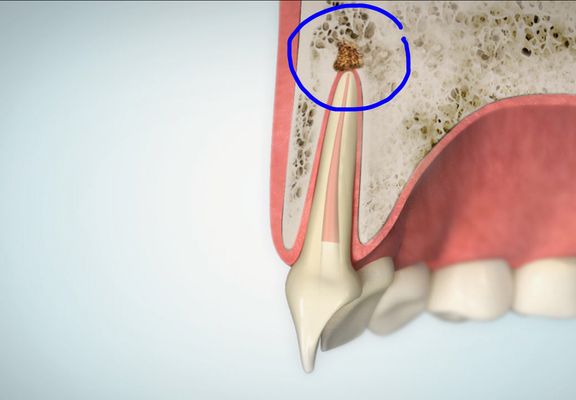
Thanks to precise techniques and modern fine instruments, the success rate of root canal treatments has significantly increased. However, in some cases, an additional treatment may be necessary — the apicoectomy. This becomes required when bacteria reappear after a previous root canal treatment, which can occur if the root canals are highly branched and difficult to clean thoroughly.
Performing an apicoectomy requires careful planning and great precision. Only then can an infected tooth root be treated successfully. To ensure accuracy and safety during the procedure, a three-dimensional X-ray image of the tooth is often used. For this purpose, we rely on low-radiation digital volume tomography (DVT), which provides highly detailed images.
The procedure is typically carried out painlessly under local anaesthesia. If you prefer, we can also perform it under light sedation or general anaesthesia.
How does an apicoectomy work?
To completely eliminate bacteria, both the affected section of the root and the surrounding inflamed tissue are removed. The remaining portion of the root is then carefully sealed with a special filling. Throughout the procedure, we make every effort to preserve as much of your natural tooth structure as possible.

Inflammation at the root tip
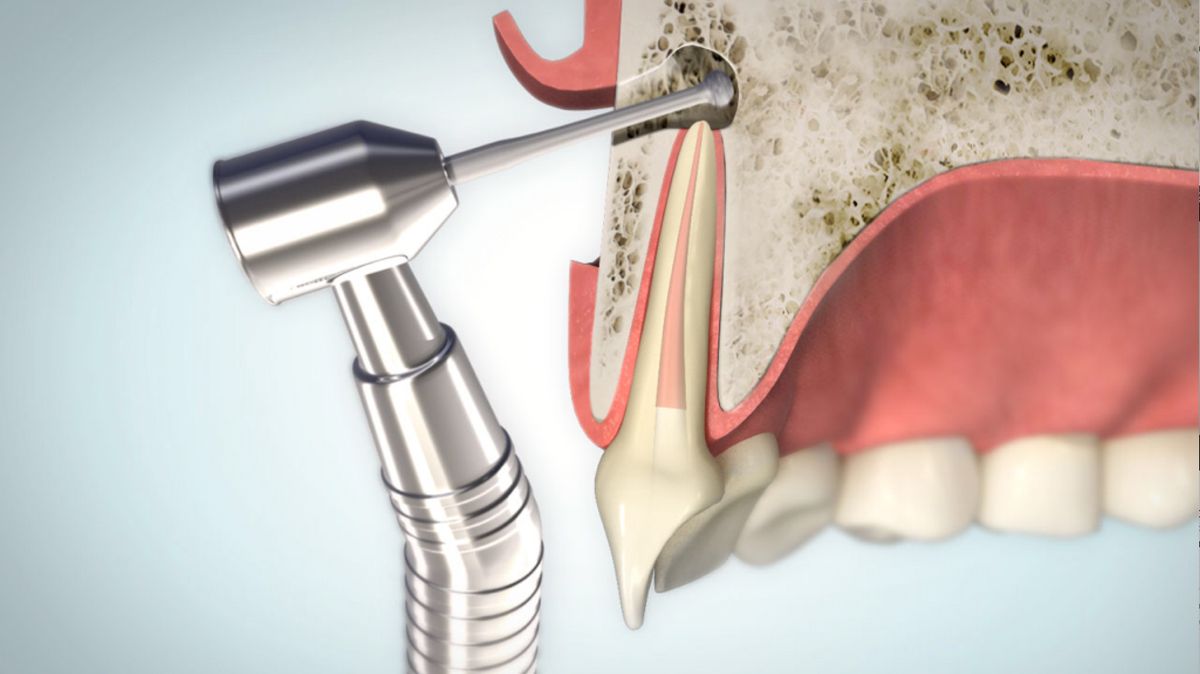
Surgical access
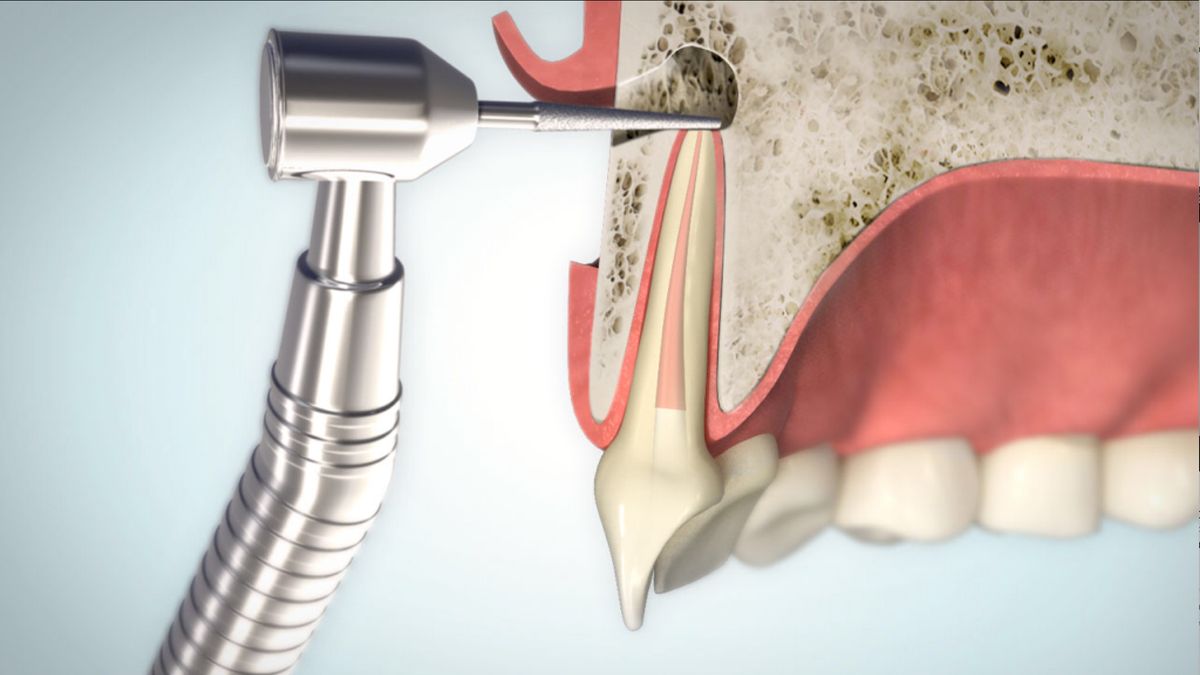
Reduction of the root tip
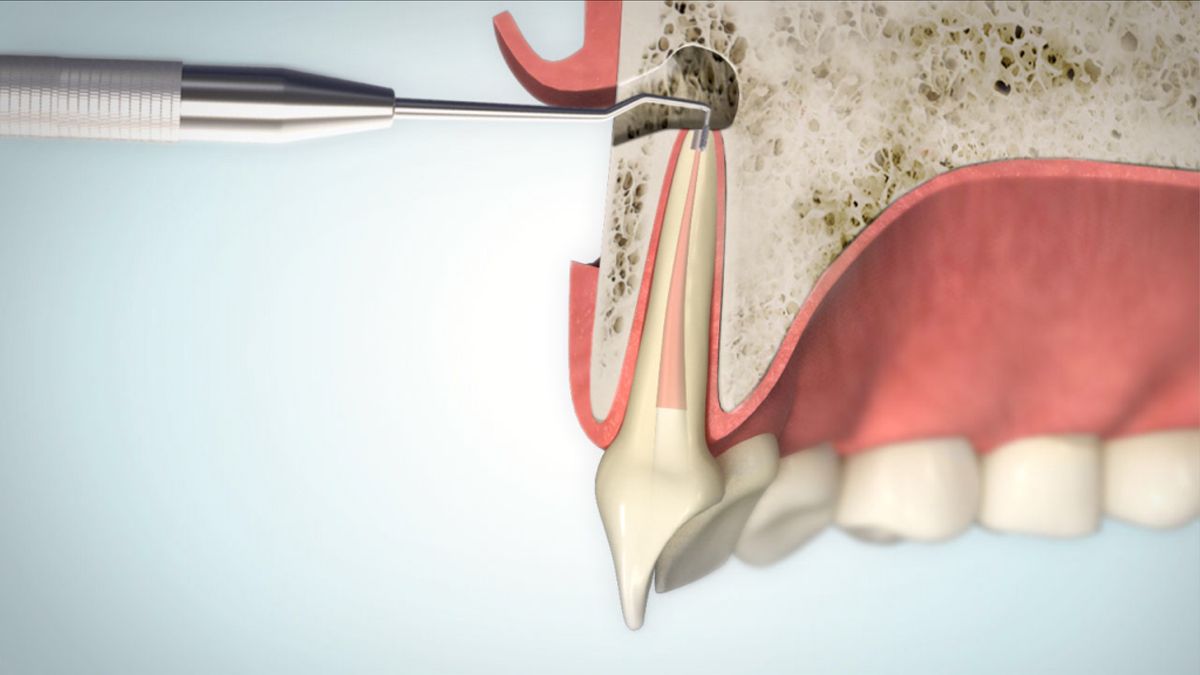
Root canal preparation from the underside of the root (retrograde approach)
Finally, the surgical access site is sealed using the patient’s own plasma (PRGF – Platelet-Rich Growth Factors). This technique offers two key benefits: firstly, it promotes wound healing through the body’s natural growth factors; secondly, the plasma acts as a buffer to prevent surrounding connective tissue from growing into the treated area, which could otherwise cause discomfort or irregular healing.
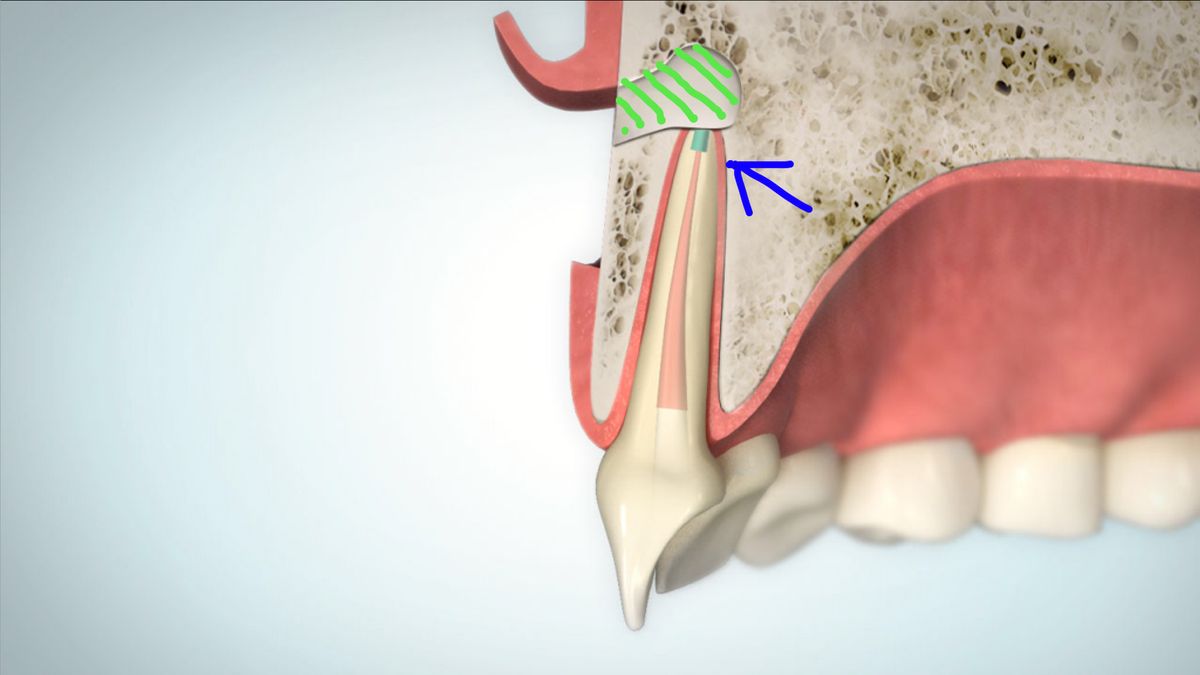
Root canal filling (blue arrow) and applied autologous plasma (green striped area)
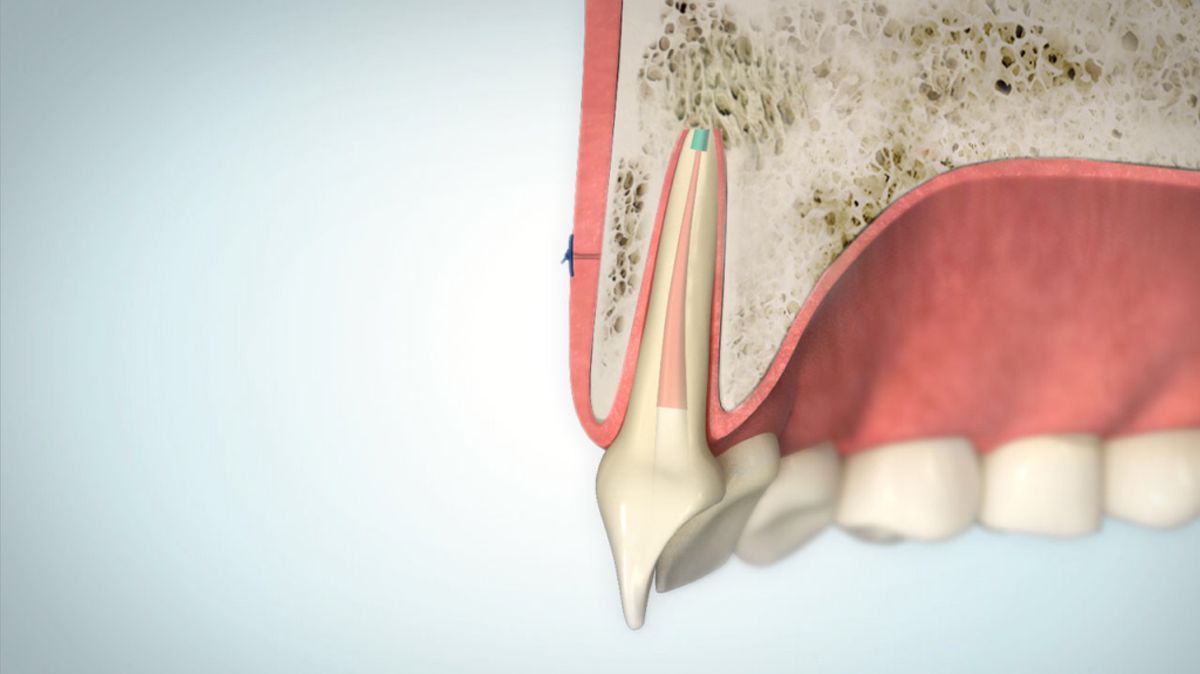
Condition after complete healing of the defect
How long does a root canal treatment take?
It’s not possible to give a precise time estimate, as every case is different. As a general guideline, you can expect approximately one hour per canal. The actual duration depends on several factors, such as the severity of the inflammation and the complexity of the root structure.
What happens during an apicoectomy (root tip resection)?
Sometimes, the root structure is so delicate or the inflammation has advanced so far that another root canal treatment would not be successful. In such cases, an apicoectomy is the best option. Instead of operating through the tooth, we access it externally, remove the inflamed root tip, and fill the resulting small cavity with the patient’s own plasma to support healing.
Will I experience pain after the treatment?
Pain caused by the infection usually subsides quickly once the bacteria have been removed. During the first one to two days, you may experience mild discomfort as the body heals. If necessary, we can prescribe mild pain relief for this period. Applying gentle cooling can also help reduce sensitivity and swelling.
How long does healing take, and when can I return to work?
After an acute infection, it’s important to rest on the day of the procedure. In some cases, taking an additional day off may be advisable, depending on the extent of the inflammation. If the jawbone has been affected, healing may take slightly longer than when only the tooth roots were infected. Biting and chewing should, however, be possible again shortly after.
How long can a tooth remain in the jaw after an apicoectomy?
If the removal of the infection is successful and the area heals properly, the tooth can theoretically remain in the jaw indefinitely without the inflammation returning. However, teeth that require an apicoectomy often have other structural weaknesses, so regular check-ups and, if necessary, crown restoration are highly recommended to ensure long-term stability.
What are the chances of long-term success after an apicoectomy?
This depends on several factors, including the severity of the inflammation and whether surrounding structures are also affected. Ultimately, the surgical technique plays a key role. A simple removal of the root tip followed by wound closure achieves a success rate of around 60%. In our clinic, we prefer a more advanced approach: in addition to removing the inflamed root tip, we also seal the root canal from the opposite end using special materials – a method known as retrograde root-end filling. This technique achieves a significantly higher long-term success rate of approximately 80–90%.


