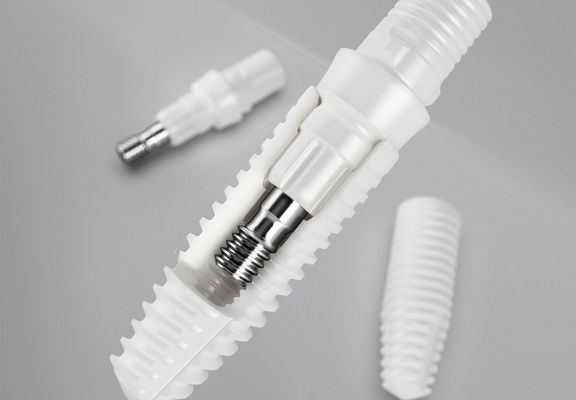
Ceramic Implants – Natural, Biocompatible and Aesthetic
In recent years, ceramic implants have increasingly established themselves as a strong alternative to titanium implants.
Their outstanding biocompatibility and tooth-like appearance make them an excellent choice for patients who may have allergic sensitivities or concerns about metal-based treatments.
For patients with very thin gum tissue (referred to as a thin gingival biotype), ceramic implants are an ideal solution because they do not produce translucency effects — meaning they do not create a metallic or greyish shadow beneath the gums that could compromise the aesthetic result.
Due to these properties, ceramic implants are also particularly advantageous in cases where the remaining bone tissue is limited.
What are ceramic implants?
Ceramic implants, like their relatives titanium implants, are artificial tooth roots used to replace single teeth, multiple teeth, or even to support a full set of teeth as anchors for a denture. They are made of zirconia (zirconium dioxide) and provide an exceptionally strong, pressure- and tension-resistant anchorage.
Why choose ceramic implants over titanium implants?
Titanium implants have been observed and studied over several decades and are scientifically very well researched. Titanium is considered biologically inert, meaning the human body does not develop rejection reactions to it (which is also why titanium is used extensively in other applications, such as hip replacements).
However, there are measurement methods indicating that some individuals show antibody reactions to titanium particles present in the blood, suggesting a potential allergic or sensitizing effect. This can be tested in certain laboratories using a blood sample taken from the patient in advance.
If an allergic predisposition is confirmed, ceramic implants are the first choice due to their excellent biocompatibility, as rejection reactions are not expected. In addition, ceramic implants offer very favorable aesthetic properties for restorations, which is why they are becoming increasingly popular.
Are ceramic implants as durable as titanium implants?
Ceramic implants are generally just as durable as titanium implants. They offer similar benefits in terms of functionality and longevity. Both materials are biocompatible and can provide a long-term solution for replacing missing teeth. However, individual factors such as bone quality, oral hygiene, and personal needs should be considered when choosing the most suitable implant material. We are happy to advise you based on your individual situation and find the best solution for you.
Is implantation with ceramic implants more complex than with titanium implants?
Implantation with ceramic implants is generally not more complex than implantation with titanium implants. The basic process and steps are similar for both materials. The choice of implant material depends on individual factors such as aesthetics, allergies, and personal preferences.
It is important that the procedure is performed by an experienced and qualified implantologist, regardless of the implant material. Treatment planning and follow-up care are crucial to success, independent of the material used. Feel free to book a consultation appointment so we can explain the pros and cons of each system for your specific situation.
Are ceramic implants more expensive than titanium implants?
Yes, ceramic implants are generally slightly more expensive than titanium implants. This is mainly due to higher manufacturing costs compared to titanium. Ceramic materials are more demanding to produce and require special processes to ensure high quality and durability.
In addition, factors such as the implant manufacturer, case complexity, and the patient’s individual requirements can affect the total price. In a consultation, we will be happy to discuss your specific situation and the best options for you.
Do ceramic implants require special care?
Ceramic implants generally do not require special care compared to titanium implants. However, it is important to maintain regular and thorough oral hygiene regardless of the implant material. This includes daily brushing, using dental floss or interdental brushes, and regular dental visits for professional cleaning and check-ups.
Ceramic implants are typically very durable and offer an aesthetic alternative to titanium implants. They are also biocompatible and can be a good choice in many cases. It is important to follow your dentist’s or implantologist’s instructions and recommendations to ensure the long-term health and functionality of your ceramic implants.


