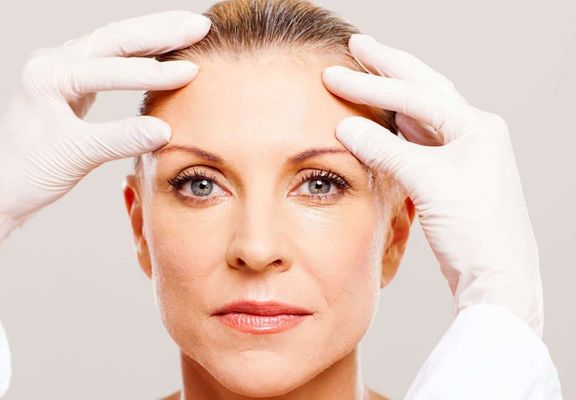
Elastin and collagen are the key structural proteins responsible for keeping the skin firm and youthful. As we age, their production naturally declines, resulting in fine lines and sagging facial contours. The principle of microneedling is based on creating micro-injuries — tiny, controlled punctures in the skin — that stimulate the body's natural healing response and trigger the production of new collagen and elastin. In this way, microneedling helps effectively combat the visible signs of skin ageing.
We use the state-of-the-art, microprocessor-controlled Digital-Pop® device to ensure optimal precision and results. Unlike older needling methods using manual dermarollers or pens, this advanced technology prevents uncontrolled skin damage.
The motorised handpiece performs rapid micro-movements, gliding a sterile needle tip over the skin more than 100 times per second. The penetration depth of the ultra-fine needles can be adjusted for each treatment area. These micro-injuries activate the skin's natural healing processes, releasing growth factors that stimulate collagen production. The result is firmer, smoother skin and a visibly rejuvenated complexion.
Microneedling with Hyaluronic Acid
For enhanced results, the firming effect of microneedling can be further intensified by simultaneously infusing hyaluronic acid during the treatment. The device continuously releases the active ingredient as the fine needles penetrate the skin, delivering moisture and hyaluronic acid directly into the upper dermal layers — where it can take effect immediately.
What are the areas of application for microneedling?
- Maintaining a collagen-rich, youthful complexion
- Fine facial lines (around the mouth, eyes, or cheeks)
- Pigmentation marks and uneven skin tone
- Scars (e.g. acne scars, burn scars, post-surgical scars)
- Stretch marks, including pregnancy-related stretch marks
What should be considered when undergoing microneedling, and are there any side effects?
Side effects from microneedling are very rare, as the body naturally produces its own collagen and elastin during the treatment. The risk of an allergic reaction is therefore extremely low. Mild swelling around the needle entry points or light scabbing may occur but can easily be managed with cooling and soothing creams. Thanks to the numbing cream applied before treatment, the procedure is virtually painless.
How often should microneedling treatments be repeated?
In most cases, a follow-up treatment is recommended six weeks and again three months after the initial session to enhance the results. The newly formed collagen remains in the skin but is gradually affected by the natural ageing process. For optimal maintenance, we recommend repeating the treatment once or twice a year. Microneedling sessions can safely be performed as often as desired.
What is the expected downtime after microneedling?
Redness following microneedling may last up to four days and is a normal sign that the skin is responding well to the treatment.


